
Water Bottles II
You receive two integers numBottles and numExchange .
numBottles represents the number of full water bottles that you initially have. In one operation, you can perform one of the following operations:
-
Drink any number of full water bottles turning them into empty bottles.
-
Exchange
numExchangeempty bottles with one full water bottle. Then, increasenumExchangeby one.
Note that you cannot exchange multiple batches of empty bottles for the same value of numExchange . For example, if numBottles == 3 and numExchange == 1 , you cannot exchange 3 empty water bottles for 3 full bottles.
Produce the maximum number of water bottles you can drink .
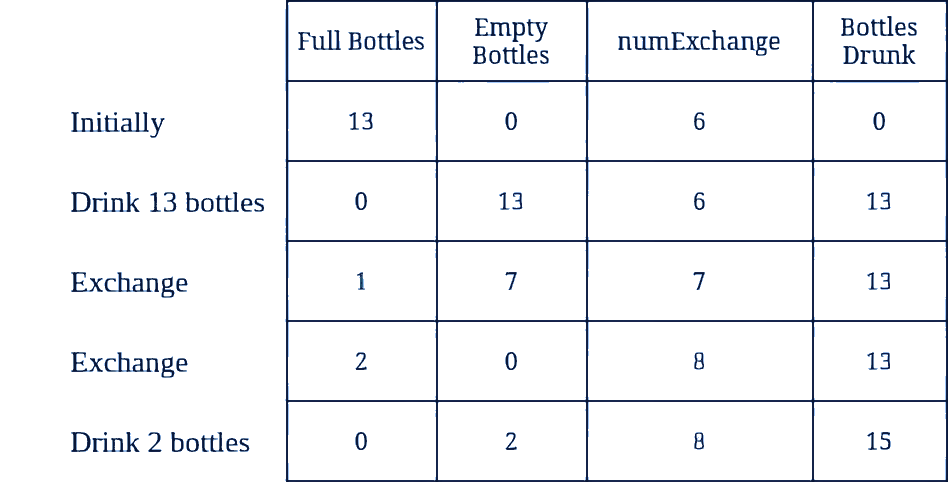
Input: numBottles = 13, numExchange = 6
Output: 15
Explanation: The table above shows the number of full water bottles, empty water bottles, the value of numExchange, and the number of bottles drunk.
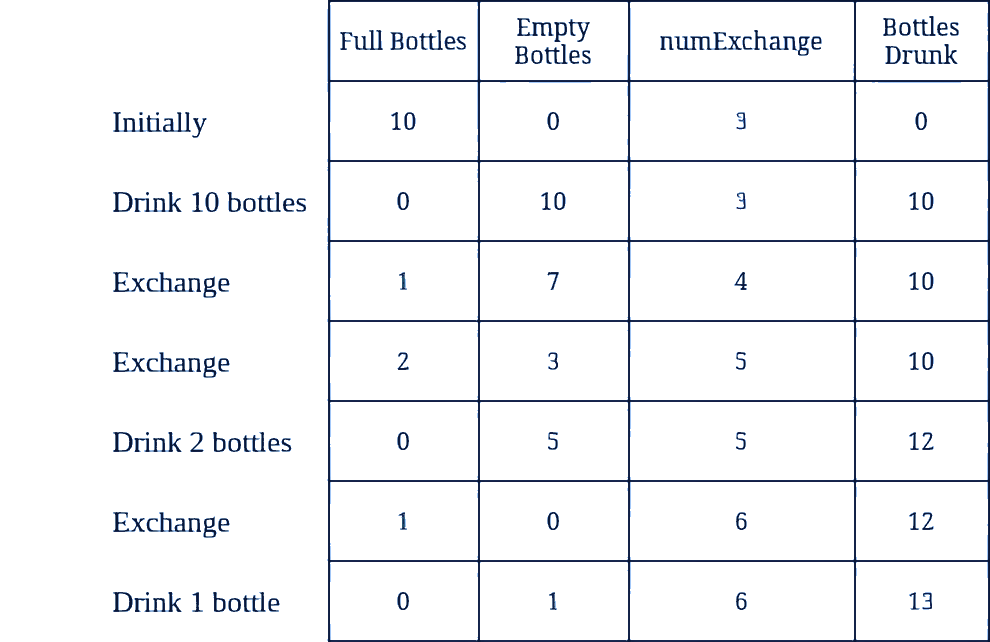
Input: numBottles = 10, numExchange = 3
Output: 13
Explanation: The table above shows the number of full water bottles, empty water bottles, the value of numExchange, and the number of bottles drunk.
Constraints
1 <= numBottles <= 1001 <= numExchange <= 100
Did this problem appear in one of your interviews?
Responses stay private.